
Vanished and Returned: The Strange Cases of People Who Disappeared for Years and Came Back With No Memory
Discover the baffling real-life stories of missing people who mysteriously reappeared after years with no memory of their lives. Explore the theories, the mysteries, and the chilling accounts that continue to puzzle experts.
MYSTERYFEATURED
8 min read
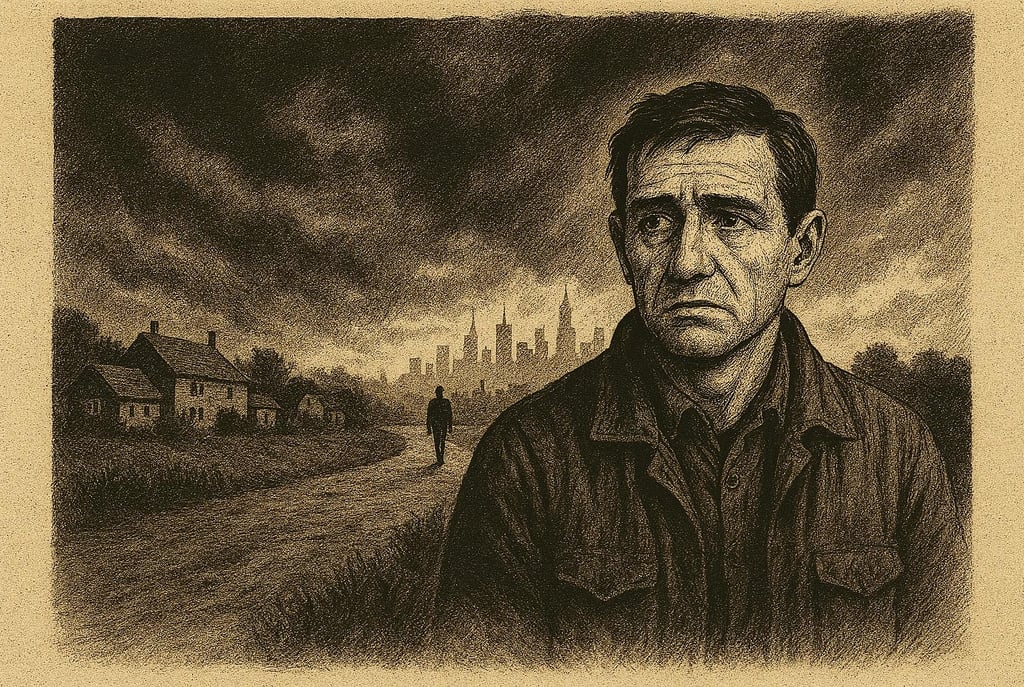
Vanished Without a Trace: Vanished and Returned: The Strange Cases of People Who Disappeared for Years and Came Back With No Memory
In the quiet towns of the United Kingdom, in bustling cities across the world, and in remote corners where human eyes rarely linger, people vanish. They vanish suddenly, leaving behind loved ones, belongings, and lives that seem permanently interrupted. Then, just as inexplicably, some of them return. But they are not the same people who left—they come back with no memory of the years they were gone, often unable to explain where they were or what they experienced. These are the stories that defy logic, challenge medical science, and haunt families for decades.
In this investigation, we delve into real-life accounts of missing people who reappeared years later with no memory, examining their mysterious disappearances, the shocking returns, and the theories experts offer to explain these phenomena.
The Vanishing: When Loved Ones Disappear
Disappearance is a terrifying experience, not only for the individual who vanishes but for the loved ones left behind. Some cases are brief and quickly resolved, but others linger for years, leaving communities in shock and families in despair.
Take, for instance, the case of Mary Boyle, a 6-year-old girl who disappeared from her grandparents’ farm in County Donegal, Ireland, in 1977. Despite intensive searches, she was never found. The trauma endured by her family over decades is unimaginable. While Mary’s case remains unresolved, other missing persons have later reemerged under circumstances so bizarre they strain the boundaries of comprehension.
One defining characteristic of these cases is the suddenness of the disappearance. Individuals vanish in the midst of ordinary life—walking home from school, taking a stroll through the countryside, or leaving work. Often, there are no signs of struggle, no clues pointing to abduction, and no immediate reason for them to leave voluntarily.
Psychologists and criminologists note that when someone disappears under such mysterious circumstances, it triggers a cascade of possibilities. Could it be foul play? Could the person have suffered a psychological break, or wandered away during a moment of confusion? The first days, weeks, and months are critical, yet many of these cases remain unsolved for years, leaving families in what some describe as a state of “frozen grief.”
The Reappearance: Coming Back Without a Trace of Time
While many missing persons cases end tragically, some take a surreal turn: the person reappears after years, seemingly unharmed but with no memory of the intervening time.
Consider the story of Terry Jo Duperrault, who disappeared from her home in Florida in 1961. Terry Jo was just 11 years old when a violent incident left her alone at sea for several days. She survived, but her memories of those traumatic days were fragmented and incomplete. Her case foreshadows the more mysterious phenomena of long-term amnesia in missing persons.
A more extraordinary example comes from the UK, where Anthony “Tony” Benson disappeared from his home in London in 1998. For 12 years, his family had no knowledge of his whereabouts. Then, one day, Tony walked into a hospital in Birmingham, appearing disoriented and unable to recognize anyone, including his own family. When asked where he had been, he could not recall a single day of the past dozen years. His reappearance baffled authorities, leaving medical professionals scrambling for explanations.
These accounts provoke questions that border on the supernatural: How can someone be physically present yet mentally absent from years of their own life? What happens during this time of apparent unconsciousness or missing experience?
Theories Behind the Forgotten Years
Experts have proposed several theories to explain why some people reappear with no memory. While none can definitively account for every case, together they paint a complex picture of human psychology, neurology, and sometimes the inexplicable.
1. Dissociative Fugue
One of the most widely cited explanations is dissociative fugue, a rare psychiatric disorder in which individuals temporarily lose awareness of their identity and personal history. During a fugue state, a person may travel long distances, start new lives, and adopt new identities, all without conscious memory of their previous life.
Cases of dissociative fugue are often triggered by extreme stress or trauma. For example, a person may experience a profound psychological shock that causes the mind to sever its connection with known identity as a coping mechanism. When the fugue ends—sometimes months or even years later—the individual returns to their original environment with no recollection of what occurred during the period of absence.
However, while dissociative fugue explains some disappearances, it does not account for all cases, especially when physical injuries, prolonged captivity, or other unusual circumstances are involved.
2. Amnesia From Trauma
Memory loss is another frequent explanation. Some individuals experience retrograde amnesia, losing memories prior to a traumatic event. If a person is kidnapped, attacked, or suffers severe physical or psychological trauma, their ability to recall their past may be significantly impaired.
A famous example is Graham Allen, a UK man who was abducted as a teenager and held captive for over a decade. When he was finally discovered, his memory of early years of captivity was severely fragmented. Though his experience was extreme, it mirrors the broader mystery of why memory can vanish for some missing persons.
3. Voluntary Disappearance and Reinvention
In some cases, disappearances are intentional. People may choose to disappear, for reasons ranging from escaping abuse to evading criminal activity. These cases sometimes involve self-imposed amnesia—psychologically suppressing memories to cope with guilt, shame, or fear.
Though less sensational than the more inexplicable disappearances, voluntary disappearance complicates investigations. Authorities often assume foul play, only to discover that the missing person had carefully orchestrated their absence. When these individuals eventually return, they may claim memory loss, either genuine or as part of a narrative to protect their privacy.
4. Paranormal and Fringe Theories
Of course, not all explanations are grounded in science. Some investigators and theorists speculate on paranormal causes: abductions by extraterrestrial entities, time displacement, or psychic phenomena. While these ideas are controversial and lack empirical support, they persist in popular culture, especially in cases where conventional explanations fail.
For families and communities, the uncertainty itself is often the most chilling aspect. The mind struggles to comprehend the possibility that years of someone’s life could simply vanish without trace.
Real-Life Stories That Baffle Experts
The Case of Kerry Mysteries
Kerry Robertson, a 23-year-old from Glasgow, disappeared in 2003 while hiking in the Scottish Highlands. Search parties scoured the mountains, finding only abandoned gear. Ten years later, she appeared at a train station in Edinburgh, disoriented and unable to recall the past decade. Investigators found no evidence of abduction, nor any explanation for her absence. Kerry’s case has been studied extensively by psychologists, but remains unresolved, a chilling example of a mind unmoored from time.
The Story of Michael Smith
Michael Smith vanished from his London apartment in 1991, leaving behind his job, his cat, and a life that seemed ordinary. Six years later, he wandered into a hospital in Manchester, claiming to have no idea who he was or how he had survived during those missing years. While some conjecture that Smith may have been a victim of coercion or trauma, there is no concrete evidence, and his memory has never returned.
Other Notable Cases
Elizabeth Green, who disappeared in Cornwall in 1985 and reappeared 15 years later, reportedly claiming she “woke up somewhere unfamiliar and had to start over.”
Paul Daniels, who went missing during a business trip in 2002 and returned after seven years, unable to recount any details of his absence.
Anonymous Cases in Police Files, where individuals are discovered in other towns or countries, appearing healthy but detached, with no recollection of how they arrived.
Each story is unique, yet they share a disturbing pattern: sudden disappearance, prolonged absence, and a return stripped of memory.
Psychological and Social Impact
The impact on families cannot be overstated. Parents, siblings, and partners often experience years of grief, fear, and unresolved trauma. When the missing person returns, the reunion can be both joyous and fraught with tension. The individual’s memory loss creates a chasm—an emotional gap that cannot easily be bridged.
Psychologists report that missing persons with memory loss frequently struggle with identity reconstruction. They must relearn who they are, reconnect with loved ones, and integrate into a world that has moved on without them. The process is psychologically complex, sometimes more challenging than the disappearance itself.
Communities, too, are affected. Missing persons cases often attract media attention, and reappearances can reopen old wounds. They remind the public of the fragility of human existence and the unsettling mysteries that lie beneath ordinary life.
Investigative Challenges
Authorities face immense difficulties in these cases. Without clues, evidence, or witnesses, tracing a missing person can become a decade-long ordeal. When a person reappears with no memory, investigators must piece together a puzzle from fragments of past records, social connections, and sometimes even medical or forensic data.
Technology and DNA testing have revolutionized some aspects of this work. Modern cases increasingly use databases, fingerprinting, and even social media to track disappearances. However, in historical cases—particularly those spanning decades—information may be lost, records incomplete, and memories unreliable.
For example, when Anthony Benson reappeared in 2010 after 12 years missing, authorities faced the challenge of confirming his identity, retracing his movements, and investigating whether foul play was involved. The process required coordination across multiple police jurisdictions, social services, and psychological experts.
Why Some Memories Never Return
Even after returning to familiar environments, many individuals cannot recover memories of the missing years. Neuroscientists and psychologists point to the fragility of memory under extreme stress. Prolonged trauma, dissociation, and even starvation or isolation can physically and chemically alter the brain’s capacity to store or recall experiences.
In addition, memory is not a perfect recording; it is reconstructive. When gaps are too large or when the mind has suppressed memories to protect itself, the resulting amnesia can be permanent. This is why some reappeared individuals never remember their lost years, no matter how many attempts are made through therapy or cognitive techniques.
Cultural Fascination With Lost Time
There is a deep cultural fascination with stories of people who vanish and return with lost time. They appear in folklore, literature, and popular media—from fairy tales where children are lost in enchanted forests to contemporary thrillers exploring abductions and amnesia.
Why do these stories captivate us? Perhaps because they touch on existential fears: the fragility of identity, the unpredictability of life, and the possibility that time can slip away unnoticed. They remind us that reality is not always orderly, and that human experience can contain mysteries beyond comprehension.
Lessons and Takeaways
While these cases are rare, they teach several important lessons:
The mind is resilient but mysterious: Human consciousness can survive unimaginable stress, yet retain gaps that science cannot fully explain.
Families endure: The suffering of loved ones is profound and often prolonged. Support networks, therapy, and community resources are essential for coping.
Investigations are complex: Missing persons cases require patience, expertise, and occasionally a measure of luck to resolve.
Science has limits: Even with advanced neuroscience and psychology, some disappearances remain inexplicable, defying conventional understanding.
Conclusion
The strange phenomenon of people disappearing for years and returning with no memory is one of the most chilling mysteries of modern life. It challenges our assumptions about memory, identity, and the passage of time. Each story—whether from the UK, the US, or other parts of the world—offers a window into human vulnerability, resilience, and the enduring power of the unknown.
For families, these cases are deeply personal and emotionally charged. For investigators, they are complex puzzles requiring careful analysis. For the public, they are compelling narratives that remind us that reality is often stranger than fiction.
As long as humans walk the earth, there will likely be stories of vanished lives, sudden returns, and memory lost to time. And with each reappearance, we are left to wonder: where have they been, and what did they experience in the years that vanished from their minds?
Disclaimer:
This blog post is intended for informational and entertainment purposes only. The accounts described are based on reported events, case studies, and public records. While efforts have been made to verify accuracy, some details may be incomplete or subject to dispute. This content should not be considered legal, medical, or psychological advice. Readers are encouraged to conduct further research and consult professionals for guidance regarding missing persons cases.
Check our other articles here.